2048 Strategy, Tips & How to Win
The most reliable 2048 strategy is to lock your largest tile in one corner, swipe mostly toward it, and keep the other tiles in a descending chain beside it. You lose 2048 when the board fills, not when merges run out, so protecting empty space matters more than chasing every match.
▶ Play 2048 free →Almost anyone can learn 2048 in thirty seconds. Very few reach the 2048 tile in their first few tries, because the game is less about merging than about order. A solid 2048 strategy keeps the board tidy enough that merges nearly happen on their own, and this guide boils the habit most winners share into a repeatable method. (Need the basics first? Start with how to play 2048.)
Why random swiping fails
Every move slides the whole board, then drops a new tile into a random empty cell. It’s usually a 2 and sometimes a 4. Each new tile is a clock ticking toward a full board.
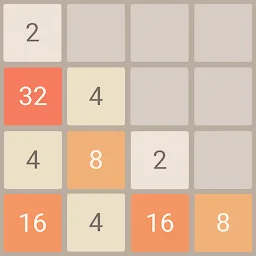
Swipe in all four directions to grab whatever merges are available, and your big tiles scatter. Small tiles wedge in between them. Within a few dozen moves the grid locks up with nothing left to combine.
The core insight: you lose when the board fills, not when you run out of merges. Everything below comes down to protecting empty space and keeping tiles in an order where merges chain naturally. If you want to know how to win 2048, this is the foundation.
Rule 1: Anchor a corner
Pick one corner and make it the permanent home of your largest tile. Never let that tile leave. Everything else is built around it.
Most players choose a bottom corner, because their main swipes become “down” and one side, which feels natural on a keyboard or phone. Which corner you choose doesn’t matter. Sticking with it does. That commitment is the heart of any 2048 corner strategy.
Rule 2: Ban one direction
Say your anchor is bottom-right. You should then swipe mostly down and right. The direction that pulls tiles away from the corner, up in this example, is the move that breaks everything. It lifts your biggest tile off its wall and lets smaller tiles slide underneath it.
Treat that fourth direction as forbidden. Once in a blue moon you may need it to avoid a lockup. If you reach for it regularly, your board has already drifted out of shape.
Rule 3: Build a snake
The real engine of a high score is a monotonic chain, a “snake” of tiles that shrinks steadily outward from your anchor. Keep the bottom row sorted largest to smallest. Then let the row above continue the descent in the opposite direction, like a snake winding across the grid:
 2    4    8   16
 ...  ...  64  32
512  256  128  —  ← largest tile anchored in the corner
With tiles ordered this way, each swipe toward the corner lets equal neighbours merge in sequence, and the merge “rolls up” the chain. Two 128s become a 256 sitting right next to your 512, ready to combine next. A tidy snake is what lets you go from 512 to 1024 to 2048 in just a few clean moves.
Rule 4: Keep the board empty
Empty cells are your lifeline. They give you the room to line up the next merge. A few habits protect them:
- Don’t chase every match. A merge that scatters your chain or drags the big tile out of position costs more order than the one empty cell it frees.
- Merge small tiles early, before they pile into a wall of stray 2s and 4s that’s hard to clear.
- Fill the anchor row first. Keep your bottom (or chosen) row as complete and sorted as you can, so your main swipe direction always has something useful to do.
Rule 5: Plan one move ahead
Before each swipe, picture the board after the slide and after a new tile lands. Three situations deserve extra care:
- If a swipe would leave only one empty cell, make sure the next forced move doesn’t trap you.
- If you’re tempted to use your banned direction, look for a two-move sequence in your allowed directions that fixes the jam instead.
- When the board is nearly full, slow down. One careless swipe here ends most games.
Quick 2048 tips for tight boards
These 2048 tips follow from the rules above. Treat the anchor row as untouchable, scan for merges that keep the chain sorted before any that don’t, and accept a slightly slower merge if it keeps your biggest tile in place. If you’re looking for the best strategy for 2048, it is this combination of one corner, one banned direction and a sorted snake, applied every single move.
Common mistakes to avoid
- Swiping in all four directions. It feels productive and quietly destroys your structure.
- Hoarding without merging. A board full of unmerged mid-size tiles has no escape.
- Breaking the corner “just once.” That one move often cascades into a scramble you can’t recover from.
- Playing fast when it’s tight. Speed is fine early on. Near a full board, every move is a decision.
Putting it into practice
Anchor a corner, ban a direction, grow a snake and guard your empty cells. Do those four things consistently and 2048 stops being luck. Open the grid, lock in your corner, and build your way up one sorted row at a time.
FAQ
What is the best 2048 strategy for beginners?
Pick one corner, keep your biggest tile locked there, and swipe using only the two directions that press tiles toward it (plus the perpendicular one when needed). Avoid the fourth direction, which rips the big tile out of its corner. This single habit gets most players to 2048.
Why do I keep losing at 2048 even when I merge a lot?
Merging for its own sake fills the board with mid-size tiles you can't combine. The board fills, moves stop changing anything, and you lose. Keep tiles sorted in a descending chain from your corner and only merge when it tidies the board, not whenever two numbers happen to match.
Which corner is best in 2048?
It doesn't matter which corner you choose — what matters is committing to one. Most players use a bottom corner so their main swipes are 'down' and a side, which feels natural. Pick one and keep your largest tile there for the entire game.