How to Play Solitaire & Pyramid Solitaire — Rules & Setup

Here is how to play pyramid solitaire: deal 28 cards into a seven-row pyramid and remove pairs of exposed cards that add up to exactly 13, with Kings going alone. Clear the whole pyramid to win. Klondike, the version most people mean by "Solitaire," works differently: you build four suit foundations from Ace to King.
▶ Play Solitaire (Klondike) free →Solitaire is a family of single-player card games that share one 52-card deck. Two of them stand out: Klondike, the column-building game most people simply call “Solitaire,” and Pyramid, a quick matching game that suits a short break. This page covers both, starting with Klondike and then a full walk-through of pyramid solitaire how to play, so you can sit down at either one with confidence.
Klondike Solitaire: board and goal
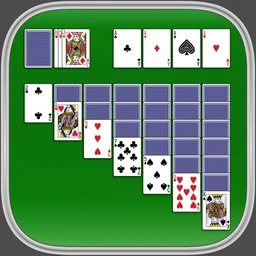
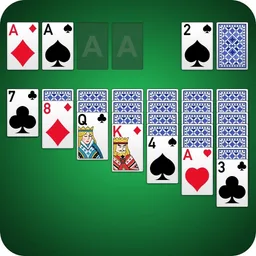
Klondike has shipped with Windows for decades, so it’s the version most players picture first. If you want to know how to play solitaire in its classic form, start with the layout. Here is the Klondike solitaire setup:
- Deal seven tableau columns. The first column gets 1 card, the second gets 2, and so on up to 7. The top card of each column is face-up and the rest are face-down.
- The remaining 24 cards form the stock (the draw pile), with a waste pile beside it.
- Four empty foundations, one per suit, sit above the tableau.
The goal is to build each foundation up from Ace to King by suit. Fill all four and you win.
Solitaire by the numbers
Many players search for the counts before their first deal, so here they are in one place for classic Klondike:
| Question | Answer |
|---|---|
| How many cards in solitaire? | 52 (one standard deck, no jokers) |
| How many rows (columns) in solitaire? | 7 tableau columns |
| Cards dealt to the tableau | 28 (1 + 2 + 3 + 4 + 5 + 6 + 7) |
| Face-up cards after the deal | 7 (the top card of each column) |
| Cards left in the stock | 24 |
| Foundations | 4, one per suit, built Ace to King |
To deal solitaire, work left to right. Put one card face up in the first column, then a face-down card on each of the other six. Next round, a face-up card on the second column and face-down cards on columns three to seven, and so on until every column has its face-up top card.
Klondike step by step
These solitaire rules cover everything a beginner needs:
- Build the tableau down in alternating colors. A red 6 goes on a black 7, a black 9 on a red 10, and so on.
- Move Aces to the foundations as soon as they’re free, then build each suit up: 2, 3, 4 and onward to King.
- Flip a face-down card whenever you clear the cards on top of it. Uncovering the tableau is the heart of the game.
- Only a King (or a run headed by a King) can move into an empty column.
- Draw from the stock when you’re out of moves. Depending on the mode, you turn one card or three at a time, and you can recycle the waste back into the stock.
Our game data shows that not every Klondike deal is winnable, but most are with careful play. The golden rule: uncover face-down cards early instead of rushing cards to the foundations.
Pyramid Solitaire: how to play
Pyramid is faster and more tactical, and it makes a good palate-cleanser between longer games. These pyramid solitaire rules take you through it from scratch.
Setup
Deal 28 cards face-up in a pyramid of seven rows: 1 card in the top row, 2 in the next, down to 7 in the bottom row. Each card overlaps the two cards beneath it. The remaining 24 cards become the stock, with a waste pile beside it.
The goal and card values
Remove the entire pyramid by pairing cards whose values add up to exactly 13. Cards count at face value, with Ace = 1, Jack = 11, Queen = 12, King = 13.
These are the pairs that make 13:
| Pair | Values |
|---|---|
| A + Q | 1 + 12 |
| 2 + J | 2 + 11 |
| 3 + 10 | 3 + 10 |
| 4 + 9 | 4 + 9 |
| 5 + 8 | 5 + 8 |
| 6 + 7 | 6 + 7 |
A King equals 13 on its own, so you simply tap it away without a partner.
Exposure: the rule behind everything
A pyramid card can only be matched when it is exposed, meaning the two cards overlapping it from below have already been removed. At the start, only the bottom row of seven is fully exposed. Each pair you clear opens up cards in the row above, so you always work the pyramid from the bottom upward.
Using the stock
When no pyramid pair is available, flip the top stock card to the waste. You can pair a waste card with any exposed pyramid card or, in most versions, with the next card you turn over. Redeals are usually limited, often to two or three passes through the stock. That limit is what turns the game into a real puzzle instead of a sure thing.
Step by step
- Scan the bottom row for any two cards that sum to 13, and remove Kings right away.
- Each removal exposes cards in the row above, so re-scan after every move.
- When the pyramid stalls, turn stock cards and match them to exposed pyramid cards.
- Keep going until the pyramid is gone. Clearing the whole board, pyramid plus stock, is a perfect game.
Strategy and tips
- Plan before you pair. In Pyramid, two cards might both pair with a third, and removing the wrong one can strand a card you needed. Look for the match that frees the most new cards.
- Track your Kings. They cost nothing to clear, so remove them the moment they’re exposed.
- In Klondike, uncover first. Don’t send a card to the foundation if it’s still useful in the tableau for building a long alternating-color run.
- Empty columns are power in Klondike. They’re landing spots for Kings and let you reorganize long sequences.
- Mind the redeal limit in Pyramid. If you only get two passes, don’t waste early turns on cards you can’t use yet.
If you enjoy relaxed, think-ahead card and tile games, our guide to Mahjong Solitaire is a natural next read. It shares the same “unblock, then clear” rhythm as Pyramid.
Quick answers on the two games
To win Pyramid, clear every card from the pyramid by pairing exposed cards that total 13 and removing Kings alone. Cards open up from the bottom as you clear the ones below them. A King is 13 by itself, and every other card needs its partner from the table above.
The two games share a deck but little else. Klondike builds four suit foundations from Ace to King, while Pyramid is a matching game built around pairs that total 13.
The logic in both is learnable in minutes. Deal a board, start from the bottom row if you’re playing Pyramid, and give it a go.
FAQ
How do you win Pyramid Solitaire?
You win by removing the entire pyramid. Pair two exposed cards whose values add up to 13, and remove Kings on their own. A card is exposed only when the two cards overlapping it below have both been cleared, so you work the pyramid from the bottom up.
What cards add up to 13 in Pyramid Solitaire?
Ace (1) + Queen (12), 2 + Jack (11), 3 + 10, 4 + 9, 5 + 8, and 6 + 7. A King counts as 13 and is removed by itself without a partner.
Is Klondike the same as Pyramid Solitaire?
No. Klondike is the classic 'build four suits from Ace to King' game played on seven tableau columns. Pyramid Solitaire deals 28 cards in a triangle and is about matching pairs that sum to 13. They share a deck but have completely different goals.
How many rows are in solitaire?
Classic Klondike solitaire is dealt into seven tableau columns, which most players call rows. The first has 1 card, the second 2, and so on up to 7 cards in the last one.
How many cards are in solitaire?
Solitaire uses one standard 52-card deck with no jokers. In Klondike, 28 cards go into the seven tableau columns and the other 24 form the stock. Pyramid Solitaire also deals 28 cards, into a triangle of seven rows.
How do you set up solitaire?
Deal seven columns from left to right: 1 card in the first, 2 in the second, up to 7 in the seventh. Only the top card of each column is face up. Put the remaining 24 cards face down as the stock and leave room above for four foundations.